ServicesCommercial Roofing
Commercial Roofing in Cypress With Safety Planned Into Every Day
We repair and replace roofs on small commercial buildings, from retail centers to offices and light industrial units. Before anyone climbs, we plan where ladders go, where the public walks and how your business keeps running. You get a free estimate in writing.
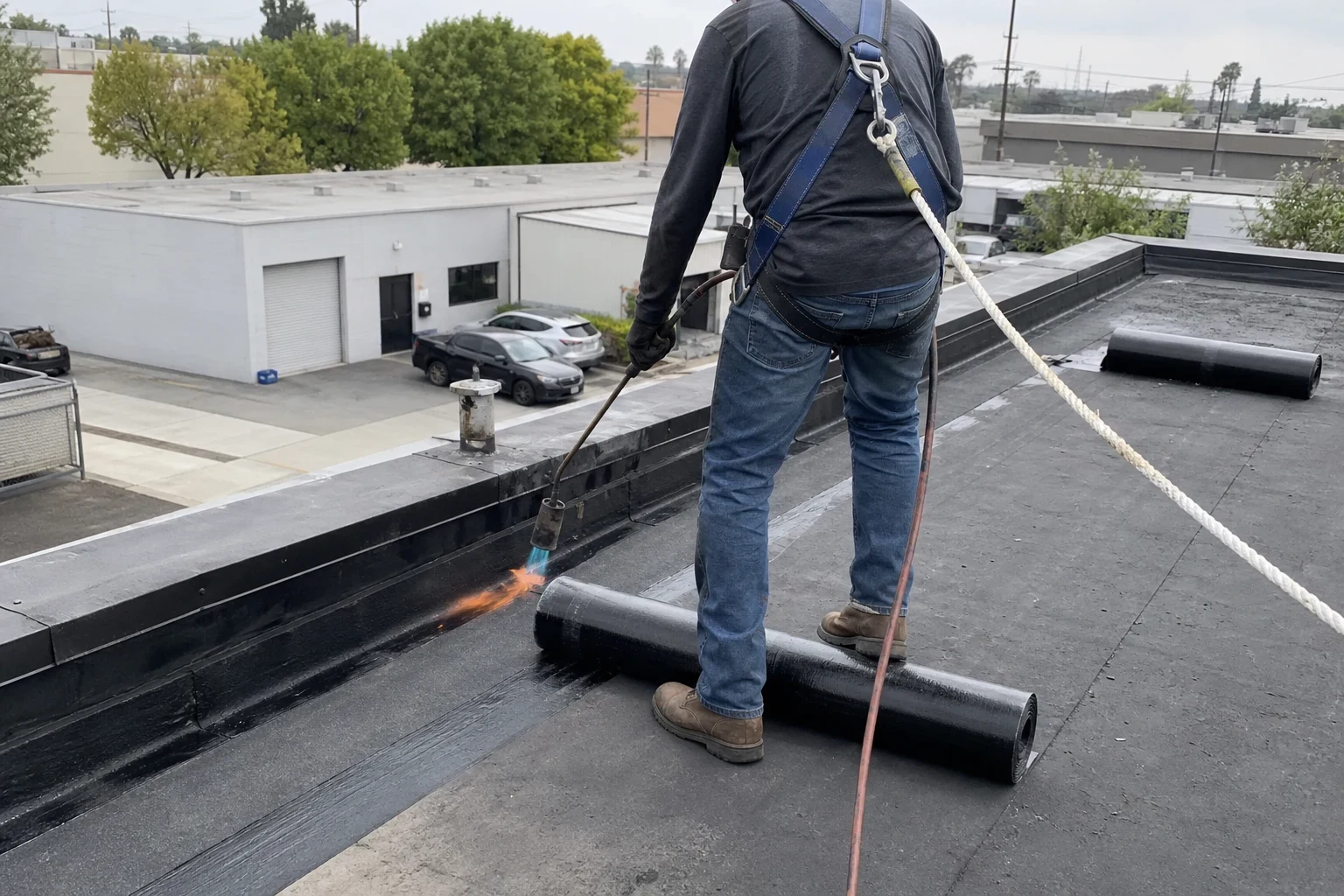
Roof work that lets your business stay open
Most commercial roofs are low-slope, covered with a single-ply membrane like TPO, a modified bitumen cap sheet or an older built-up gravel system. They fail differently than shingles on a house. Seams open, flashing pulls away from parapet walls, water sits for days after a winter rain, and service techs walking to rooftop units leave small punctures behind.
Our first job is keeping people safe. Your staff, customers and tenants still need the front door, the parking lot and the loading area while we work. We mark off drop zones, keep material lifts away from walkways and set fall protection along open edges before work begins.
Sometimes a few new sections of membrane and resealed flashing are enough. Sometimes the insulation underneath is soaked and replacement is the honest answer. We tell you which, with photos of what we found.
What our commercial roofing work covers
- Leak tracing and membrane repair
- Water on a flat roof can travel a long way from where it shows up inside. We follow it back to the open seam, failed boot or cracked flashing, then repair with matching material, welded or adhered the way the original system was built.
- Flashing, parapets and penetrations
- Most commercial leaks start at edges and openings: parapet caps, pipe boots, drains and the curbs under HVAC units. We reseal or rebuild these details so they flex with the roof instead of cracking.
- Drainage and ponding fixes
- Water that stands more than a couple of days after rain wears a membrane out early. We clear drains and scuppers, and where low spots keep collecting water, we can add tapered insulation or crickets to move it off the roof.
- Full reroofing
- When the membrane is worn through or the insulation is wet, we tear off to a sound deck and install a new system. A low-slope reroof in California generally has to meet the state energy code's cool roof rules, so we plan for that from the start.
- Gutters and downspouts
- Many buildings shed water through gutters and downspouts at the eaves. We check and replace them as part of the job so water leaves the roof cleanly. Our Gutters page covers that work in more detail.
- Help with insurance claims
- If wind or a fallen limb damaged the roof, we photograph everything and work directly with your insurance claim. We explain each step, and the adjuster still makes the coverage decision.
Signs your building's roof needs a closer look
Stained ceiling tiles
Brown rings on drop-ceiling tiles usually mean water has been getting in for a while. Wet tiles can sag and fall, so it is worth checking before someone is standing under one.
Water that won't drain
Puddles still sitting on the roof days after rain point to clogged drains or a sagging deck. Standing water adds weight and speeds up wear on seams.
Blisters and split seams
Bubbles in the membrane, curling seam edges or cracks around the perimeter mean the roof is losing its seal.
Loose metal at the edges
Rusty or lifting parapet coping and edge metal let wind get under the roof. Loose metal can also fall toward walkways below.
Bare spots on a gravel roof
On built-up roofs, gravel that has washed or blown away leaves the asphalt exposed to sun. Those patches dry out and crack.
How a commercial roof job runs
- 1
Free inspection and safety walk
We inspect the roof surface, drains, flashing and rooftop equipment. While we're up there we note the roof hatch, ladder points and where the public moves around the building, so the safety plan is ready before the estimate.
- 2
Written estimate with photos
Our free written estimate lists every line item and comes with photos taken on your roof. We'll tell you plainly whether a repair will hold up or a new system is the better use of your money. If spreading out the cost would help, ask us about financing through Service Finance Company, subject to credit approval.
- 3
Scheduling around your hours
We agree on start times, noisy tear-off days and any work outside business hours. We pull the permit and give you a short notice you can pass along to staff or tenants.
- 4
Setting up each work day
Barricades and signs go up first, then fall protection along open edges. Debris chutes and dumpsters stay away from entrances, and rooftop units are covered so dust stays out of the air system.
- 5
Cleanup and final walk
We sweep the lot and walkways with a magnet for nails, clear the drains and walk the finished roof with you. You get photos of the completed details for your records.
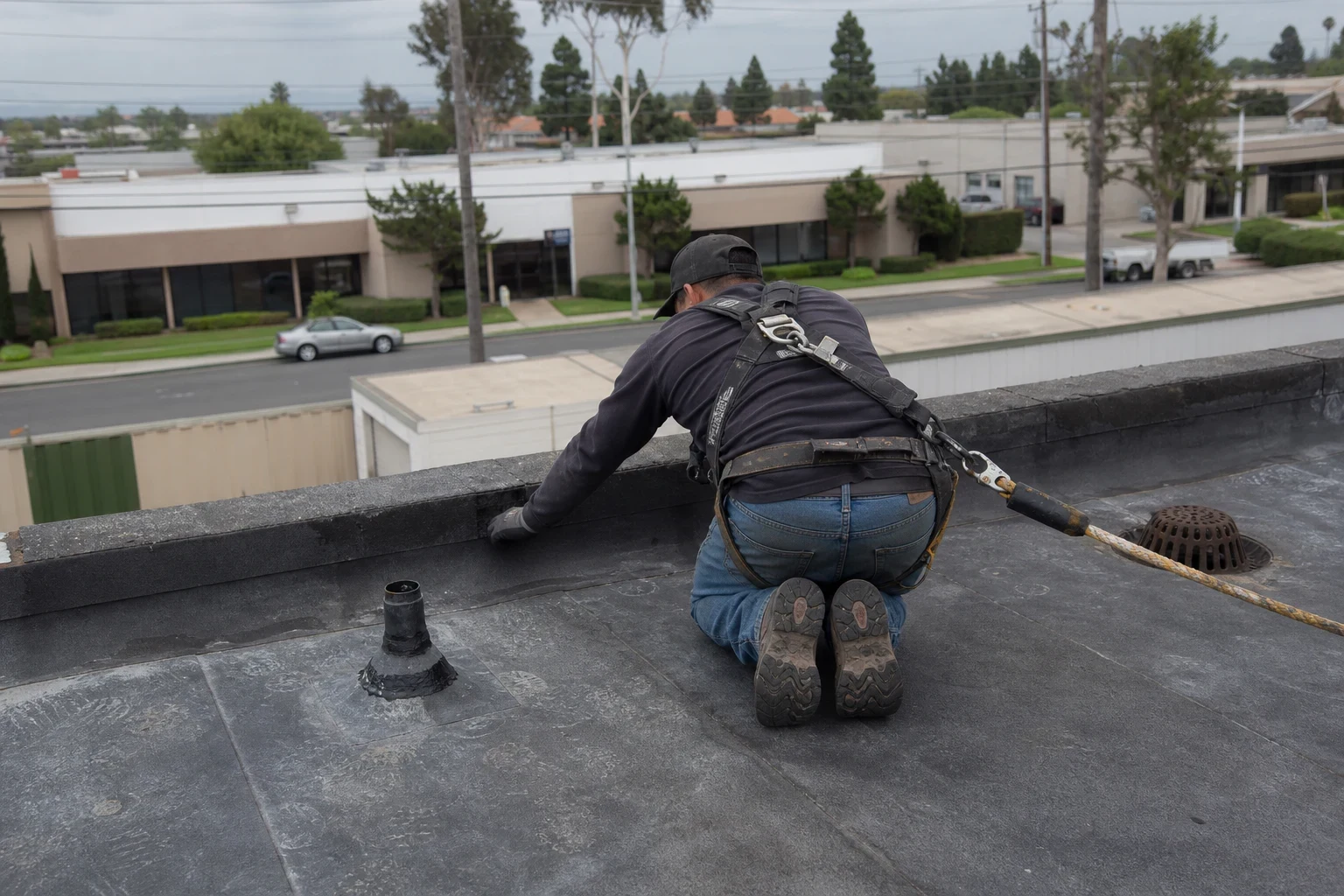
What moves the price of commercial roof work
Every building is different, so we price from what we see on your roof instead of guessing by the square foot. Your free written estimate lists each item so you can compare it line by line. These are the things that move the number most.
- Roof size and layout
- Total area matters, and so does how chopped up it is. Many parapets, roof levels and corners mean more flashing and more labor.
- What's underneath
- Dry insulation and a sound deck keep costs down. Wet insulation or rusted metal decking has to come out and be replaced, and we only know the extent once we test and open it up.
- The roofing system
- TPO, modified bitumen and built-up roofs differ in material and labor. Cool roof requirements can also shape which products fit your building.
- Access and safety setup
- Building height, how close the roof edge sits to busy walkways and whether work has to happen after hours all affect staging, fall protection and crew time.
- Rooftop equipment and permits
- Each HVAC unit, vent and skylight needs its own flashing work. Permit and inspection steps vary by job and are included in the estimate.
Commercial roofing questions we hear
Something not covered here? (714) 613-8375
Will we have to close while the roof is being redone?
Usually not. Before we start, we map out your entrances and peak hours, and the loud tear-off work happens at times you pick. When part of the building or lot needs to be blocked off for a day, you hear about it in advance so you can plan.
How do you keep customers and staff safe around the building?
We set barricades and signs under the work area, keep lifts and debris chutes away from doors and walkways, and use fall protection on the roof. At the end of each day we sweep for nails and leave the area clear.
Is a repair enough, or does the whole roof need to come off?
Two things decide it: how much life the membrane has left and whether the insulation under it has stayed dry. When the trouble is confined to a few seams and flashing details, a repair is often the sensible spend. Once water has worked its way through the insulation, patches rarely last long, and we'll say so directly instead of selling you a fix that won't hold.
Do you pull the permit?
Yes, we handle the permit and schedule the inspections for reroofing work. We also explain any code items, like cool roof requirements, that affect the materials we recommend.
Do you work on buildings outside Cypress?
We do. Besides Cypress, we work on commercial roofs in nearby towns including Los Alamitos, Garden Grove, Buena Park and Cerritos. Our Service Areas page lists the rest.
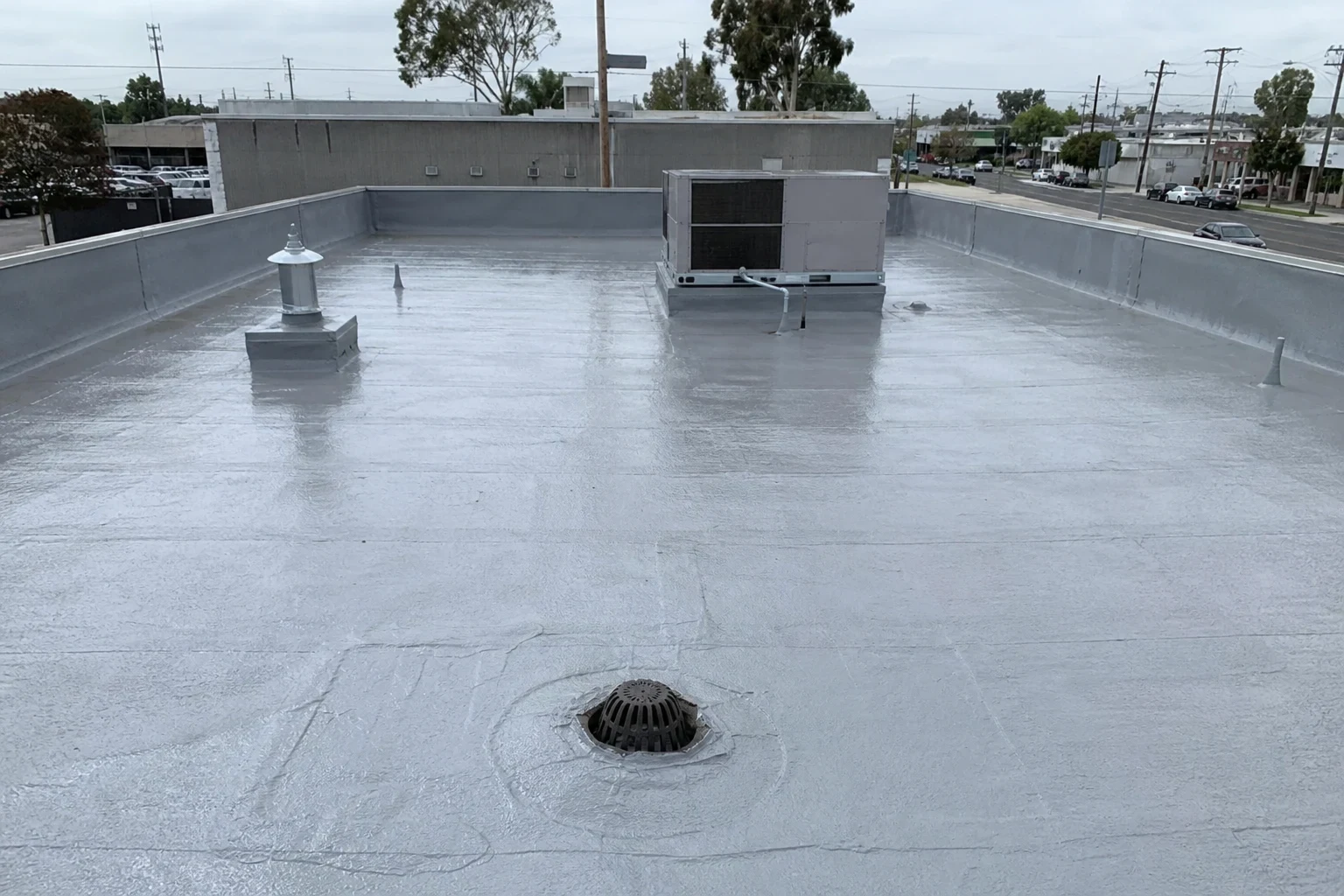
Let's look at your building's roof
Give us a call, describe what's going on up there, and we'll find a time to go over the roof together. The inspection costs nothing, and the written estimate is yours to share with partners or property owners.