ServicesAsphalt Shingle Roofing
Asphalt Shingle Roofing in Cypress
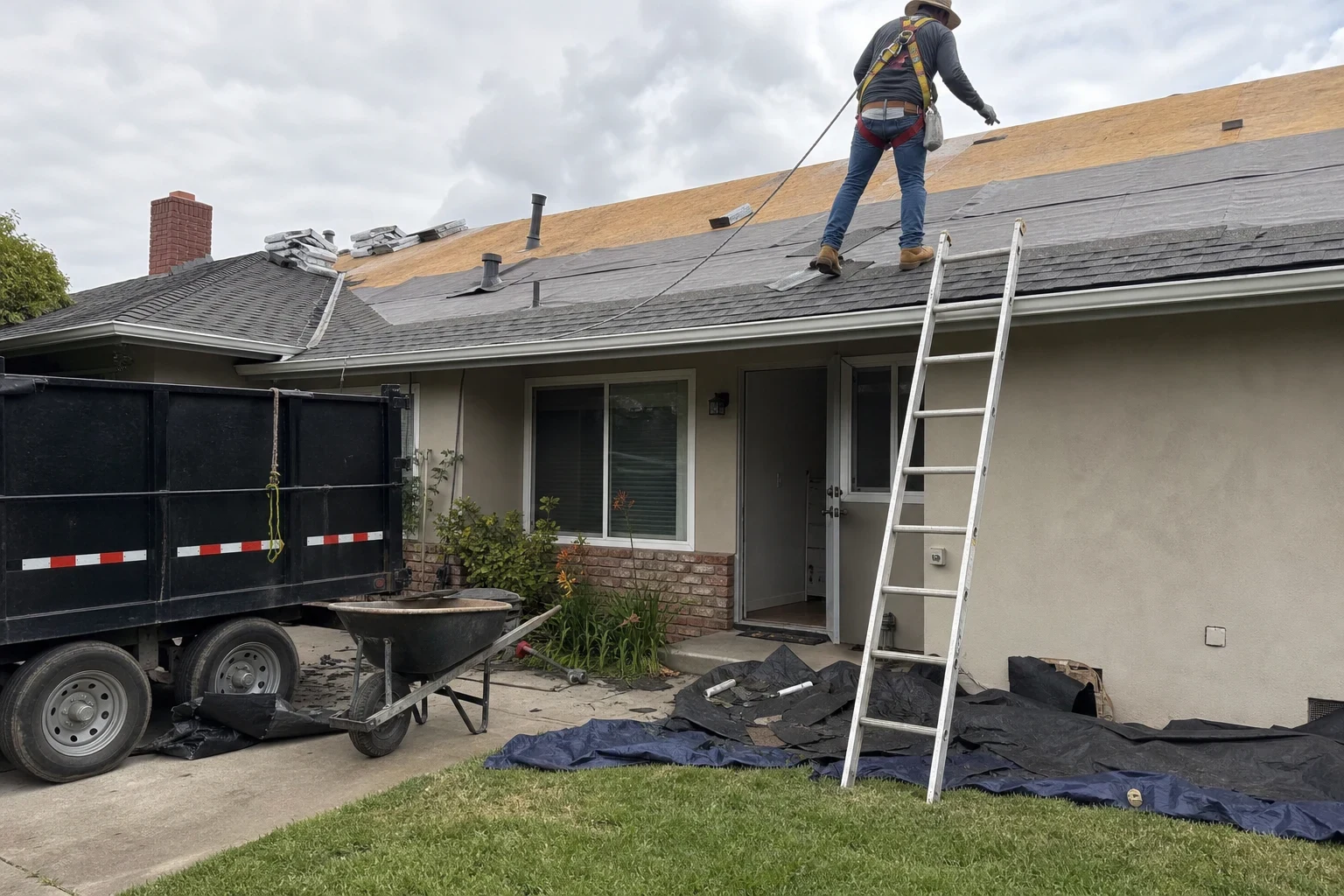
A well-built shingle roof keeps your home dry and cool for years. We tear off, inspect the deck and install new asphalt shingles with ladders secured, work zones marked and your yard swept each evening. You get a free written estimate before anything starts.
A Roof That Suits Most Homes, Installed Carefully
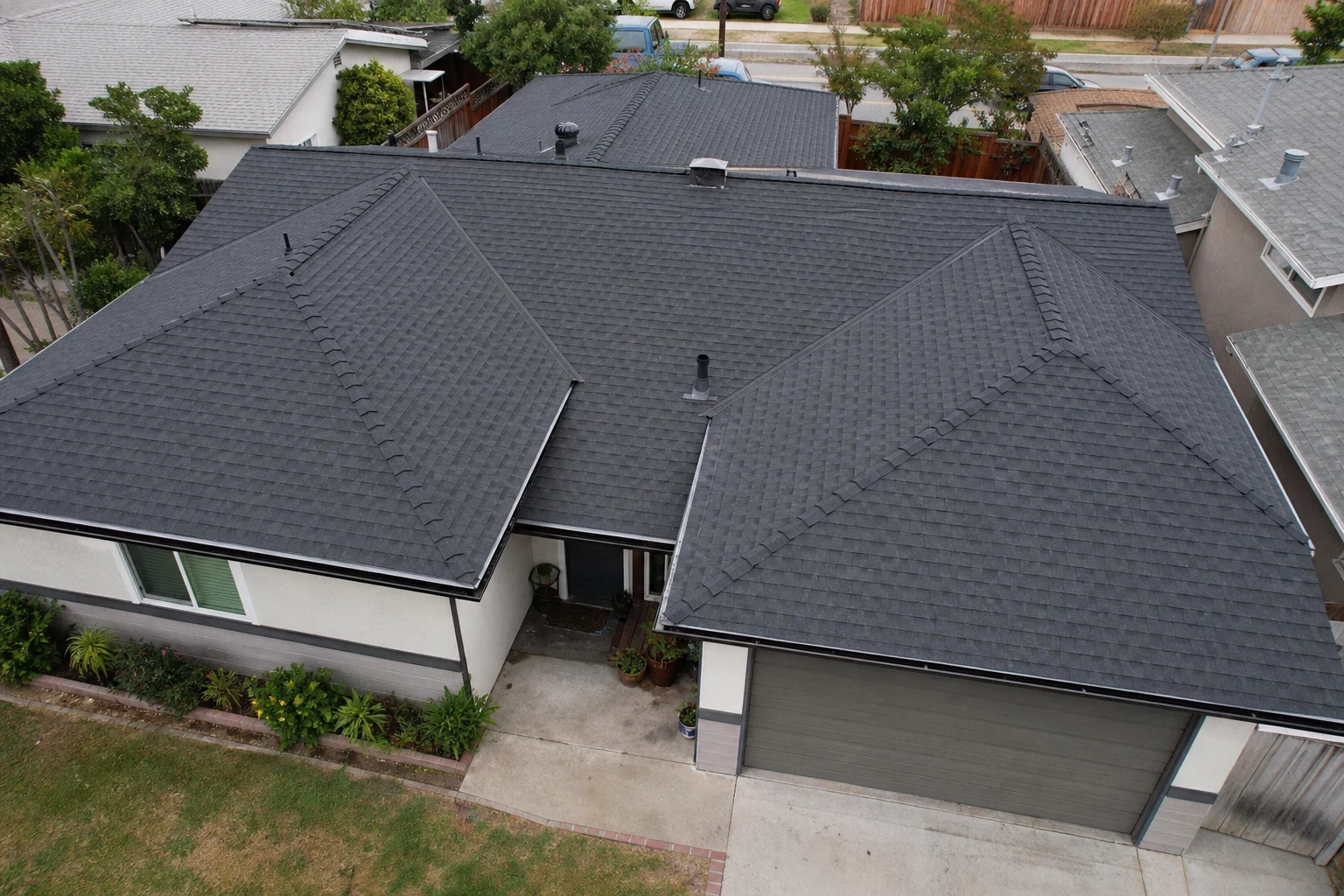
Asphalt shingles are the most common roof on homes in our area for good reasons. They handle sun and winter rain well, come in many colors, and cost less to install than tile. Most of the roofs we put on use architectural shingles, which are thicker and layered for a deeper look and better wind resistance than older flat 3-tab styles.
A shingle roof is the right call when your current roof is worn out across the whole surface, when patches keep failing, or when you want to move away from a heavy material. If only a small area is damaged, our roof repair page may be the better place to start, and we will tell you honestly which one fits.
Roof work happens right over your family's heads, so we run every job with safety at the center. That means tied-off ladders, fall protection for our crew, a marked drop zone below the roof edge and a magnet sweep for nails before we leave each day.
What Your New Shingle Roof Includes
- 01
Old roof stripped to bare wood
Every old shingle and the worn underlayment beneath it come off until the sheathing is exposed. Debris drops into a bin or onto tarps, never loose across your lawn or flower beds.
- 02
Deck inspection and repair
Once the wood is exposed, we walk it and check for soft, delaminated or water-stained sheathing. Bad boards are replaced so your new shingles are nailed into something solid. We show you photos of anything we find.
- 03
Underlayment and leak barriers
A synthetic underlayment covers the whole deck, with self-adhered membrane in valleys and around pipes and vents where water collects.
- 04
New flashing and drip edge
Metal drip edge goes along the eaves and rakes, and we replace worn flashing at walls, chimneys and vent pipes. Old flashing is a common source of leaks on reroofs.
- 05
Balanced attic ventilation
We check intake and exhaust vents and add ridge vent where it makes sense. Good airflow helps shingles last and keeps attic heat down in summer.
- 06
Permit, inspection and cleanup
We pull the city permit and schedule the inspection. At the end, gutters are cleared of granules and debris, and the yard and driveway get a final magnet sweep.
Questions about Asphalt Shingle Roofing?
Call(714) 613-8375Signs Your Shingles Are Ready to Be Replaced
Granules in the gutters
Piles of gritty, sand-like granules mean the shingles are losing their protective coating. Bare spots age fast in strong sun.
Corners lifting or middles dipping
A shingle that curls up along its edges or bows down in the center has stopped sealing flat. Wind-driven rain can then slip underneath it.
Missing tabs after high winds
If Santa Ana winds keep tearing shingles loose, the sealant strips have likely dried out across the roof. Replacing a few at a time stops working.
Water marks inside your home
A tan ring on a bedroom ceiling, wet patches on attic insulation or pinholes of light showing between the roof boards all mean water is already getting past the shingles. If it is one isolated spot, our roof leak repair page may be the better starting point.
An older roof with many patches
When a roof has been repaired again and again, mismatched sections and old nail holes add up. A full replacement often costs less over time.
The Steps of a Shingle Roof Job
- 1
Free look at your roof and a written estimate
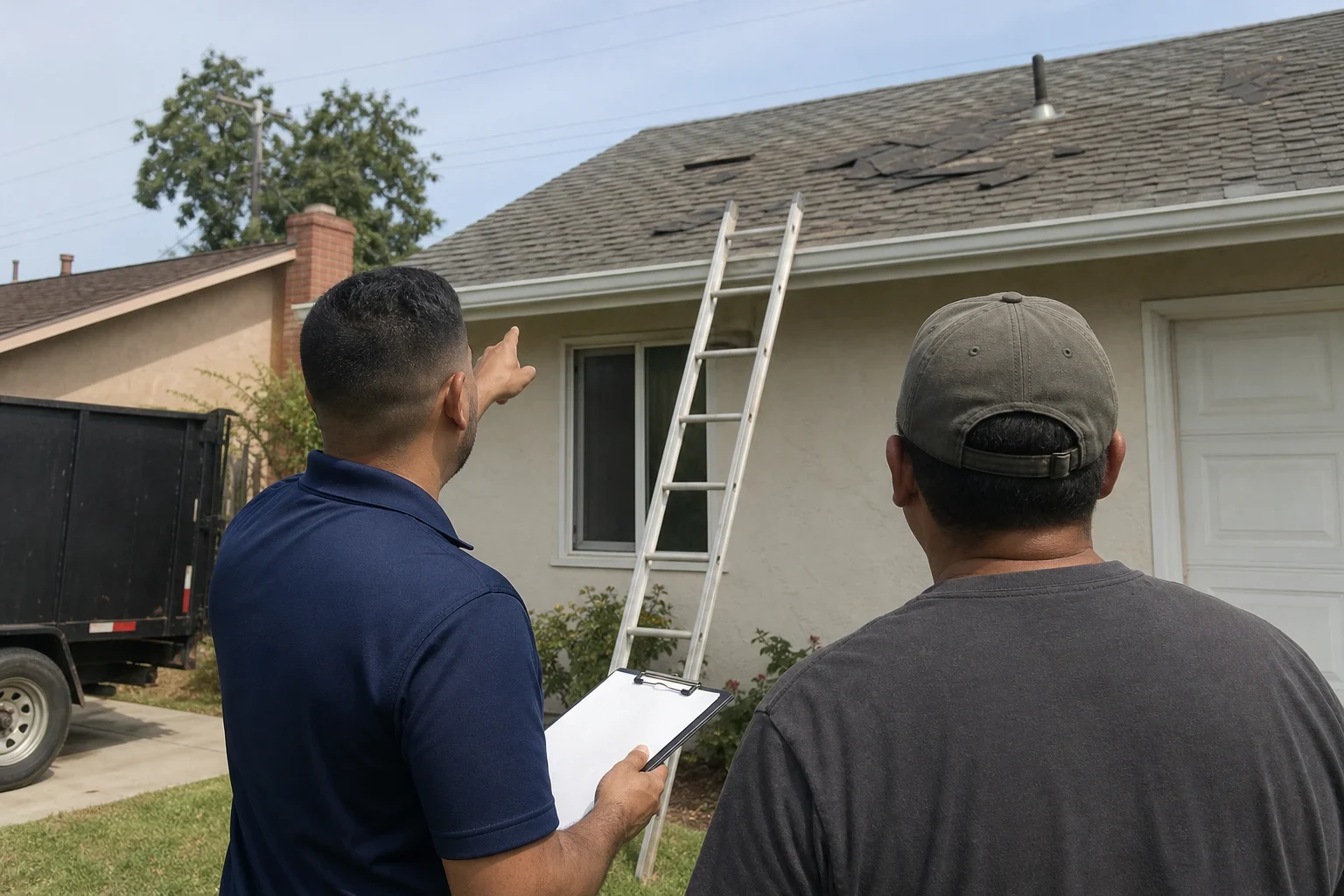
We check the roof, the attic and the gutters, photograph what we see and review the pictures with you. You then get a free written estimate split into its individual parts, so it's clear what each dollar pays for.
- 2
Permit and scheduling
We file for the permit, order the materials and pick a start date. Ahead of the work, we'll ask you to move vehicles, bring in patio furniture and decide where children and pets will spend the day.
- 3
Old roof off, deck repaired
The crew protects plants and windows, marks the drop zone and strips the old roof. Damaged decking gets replaced that same day, so your house never sits open overnight.
- 4
New roof goes on
Underlayment, flashing, vents and then shingles are installed in sequence, nailed to the manufacturer's pattern. Most homes take a few working days, and a bigger roof or a run of rain can stretch that.
- 5
Final sweep and permit closeout
A last magnet pass covers the yard and driveway, you see the finished roof from the ladder or in photos, and we meet the city inspector to close the permit.
What Drives the Price of a Shingle Roof
No two houses are alike, so we base your price on the roof itself rather than a ballpark figure. The free written estimate breaks out every item, so you can follow where each dollar goes. If spreading out payments would make it easier, financing is available through Service Finance Company, subject to credit approval, and we're glad to go over it by phone.
- Shape of the decking
- Soft or rotted boards add to the price, and how many there are only shows once the old shingles come off. You get photos and an explanation before we change anything.
- Roof size and pitch
- A bigger roof takes more shingles and more hours. A steep one needs added safety gear and a slower pace.
- Layers already on the house
- On some homes, an earlier roofer put a second layer straight over the first. Removing two layers takes more labor and means more weight to haul off and dispose of.
- Which shingle and color you pick
- Standard architectural shingles, thicker designer styles and cool-rated shingles that bounce back more sunlight each carry a different price.
- Openings and flashing work
- Every chimney, skylight, dormer or new vent adds cutting and flashing time.
Common Questions About Shingle Roofs
Can new shingles go on top of my old roof, or does it all have to come off?
Some jobs allow a second layer, but we almost always recommend removing the old one. Once it is off, we can find soft decking and worn flashing and repair them before the new roof goes on. Your roof also carries less weight, and the new shingles lie smooth instead of picking up lumps from the old layer underneath.
Can my children and pets stay home while you work?
They can, with a little planning. The ground below the roof edge, where old material falls, gets roped off, and we ask that kids and animals stay inside or on the opposite side of the yard while the crew is overhead. Tear-off day is the loudest, and some families use it for a day out.
How many years will a new shingle roof hold up?
Architectural shingles that are installed correctly commonly last twenty years or longer. Solid decking, good attic airflow and clean gutters all help a roof get there.
Could insurance cover part of my new roof?
It might, if the damage came from wind or another covered cause. We work directly with your insurance claim, can be there when the adjuster visits and hand over clear photos and measurements. Whether it is covered is up to your insurer.
Ready to Talk About a New Shingle Roof?
Tell us about your roof and we will set up a free inspection, then give you a written estimate you can take your time with. No pressure, just clear answers.